From imperial ignorance to responsibility in the wake of BLM: an ethnographic study of moral economies of racial reckoning in the United Kingdom
This new project, in collaboration with Dr. Farhan Samanani (King’s College London), Dr. Victoria Klinkert, and two Ph.D. students, was funded by the Swiss National Science Foundation with over 800,000 Swiss Francs for the duration of four years (2026-2030).
The objective of this research project is to interrogate how a range of actors, institutions, and grassroots groups in the UK seek to confront, understand and act upon imperial ignorance by taking responsibility for their implication in colonial histories and their afterlives today.
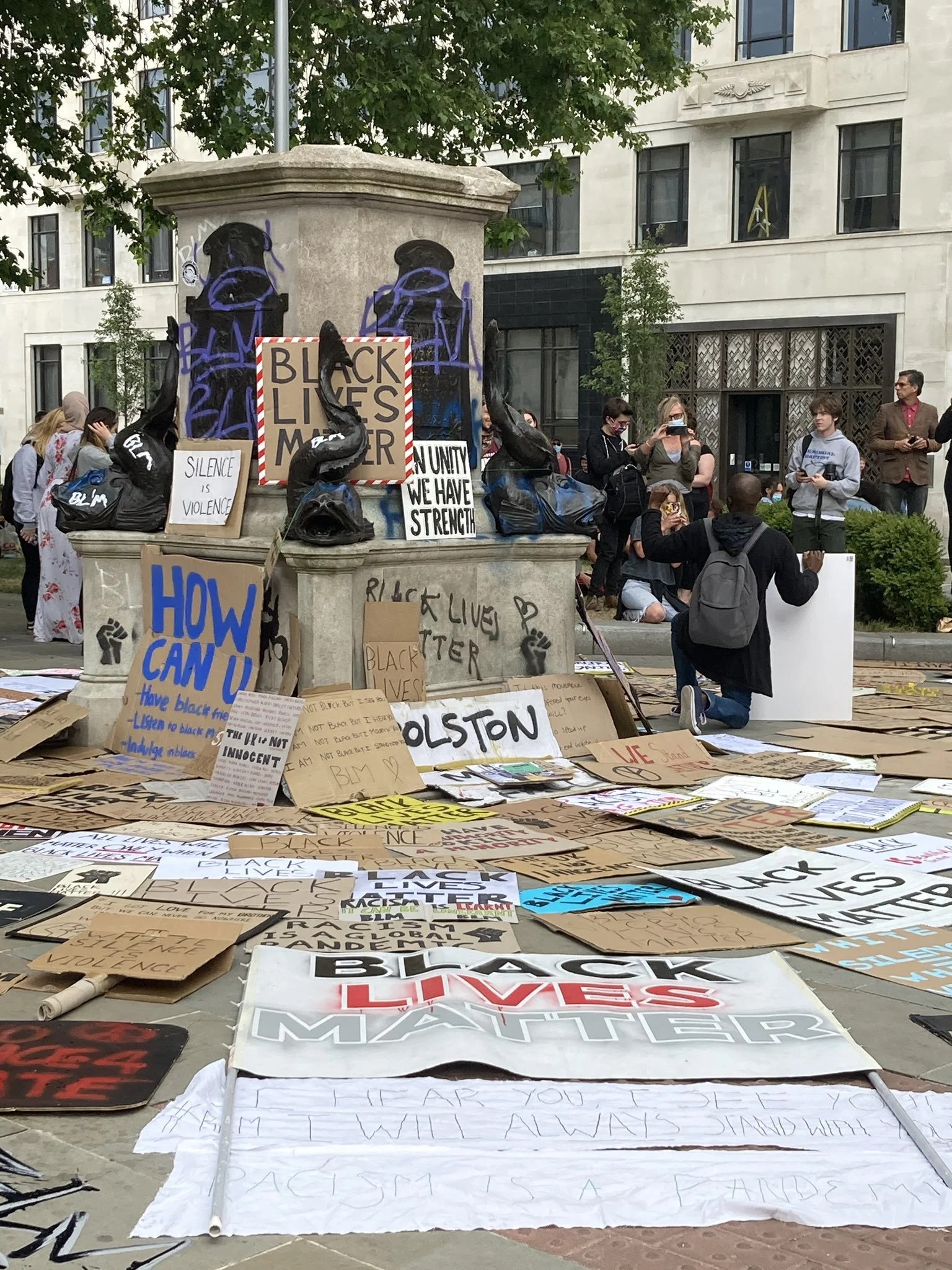
What makes the current moment of racial reckoning so astonishing is that demands for taking responsibility for historical complicities with colonialism and slavery are no longer confined to activist circles. On the contrary, a wide range of actors, including policy makers, politicians, corporations, representatives from the arts and education sector, and some of Britain’s wealthiest elites have vowed to address the ‘skeleton in the closet’ (Renton 2021).
Efforts have ranged from promises to pay financial reparations on the part of corporations and elite individuals to changing practices of representation in the arts and cultural sector to demands for systematic and legal change put forward by some organisations.
The empirical starting point for this project constitutes this assemblage of actors across the UK pursuing new forms of responsibility that respond to the racial reckoning of 2020, and their distinct moral, political and legal imaginaries. Thus, as a team, we aim to carry out ethnographic fieldwork both individually and collaboratively, within and across three distinct groups:
elite actors and institutions, including wealthy individuals and corporate actors, who seek to address their own complicities in imperial histories through a language of reparations
actors and institutions within the cultural and arts sector, including Universities, trusts, foundations and museums, who engage in changing forms of representation aimed at educating broader publics
grassroots communities, activists and social movement members who respond to the enduring legacies of imperial histories by advocating for radical reform.